

There’s a reason fireplaces become the heart of a home, they bring warmth, atmosphere and a sense of energy and ritual that completely elevates a space. But like most things worth doing, there’s a little more to it than meets the eye.
At Subiaco Restoration, our team in heating regularly sees homeowners arrive with a strong vision for their space, only to realise later there are practical considerations they hadn’t factored in. From flue placement and heating capacity through to wall construction and layout planning, small oversights early on can quickly become frustrating later.
“The biggest mistake people make is obviously going somewhere else,” jokes Karinda from the heating team.
In reality, most mistakes come down to timing, planning and understanding how different fireplace systems actually work within a home. Here are some of the main ones the team sees, and how to avoid them.
Expecting one fireplace to heat the whole house
One of the most common misconceptions is assuming a fireplace will comfortably heat an entire home.
In reality, fireplaces work best when chosen specifically for the space they’re intended to heat. Oversizing a unit can make the immediate living area too hot long before the rest of the home feels comfortable. This is especially common in smaller open-plan homes where people choose a larger unit expecting maximum output, only to find themselves overheating in the main living zone.
The best fireplace is not necessarily the biggest one. It’s the one suited to the scale, layout and way you use your home.
Electric fireplaces can also fall victim to unrealistic expectations. While modern electric units offer impressive atmosphere and supplementary warmth, they’re generally not designed to function as whole-home heating systems in the same way larger wood or gas units can.
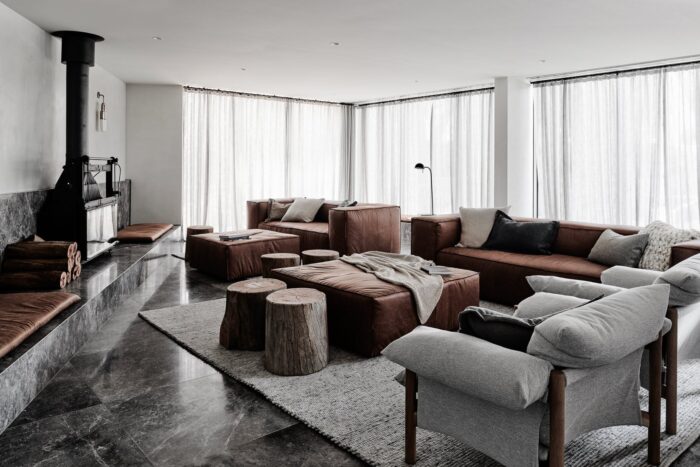
Cheminees Philippe Radiante 1200, Hecker Gutherie Architects
Leaving the fireplace decision too late
This is arguably the biggest mistake of all.
Many homeowners don’t begin thinking seriously about their fireplace until construction is already underway, or worse, nearly finished. By that point, options can become far more limited.
Fireplaces affect much more than a single wall. They influence framing, ventilation, flue pathways, cabinetry, TV placement, electrical planning and even the exterior appearance of the home.
For inbuilt fireplaces especially, homeowners are often surprised to learn that achieving a sleek flush look usually still requires building out a wall cavity to house the unit and its components.
Starting the conversation early gives far more flexibility and usually results in a cleaner, more integrated outcome.
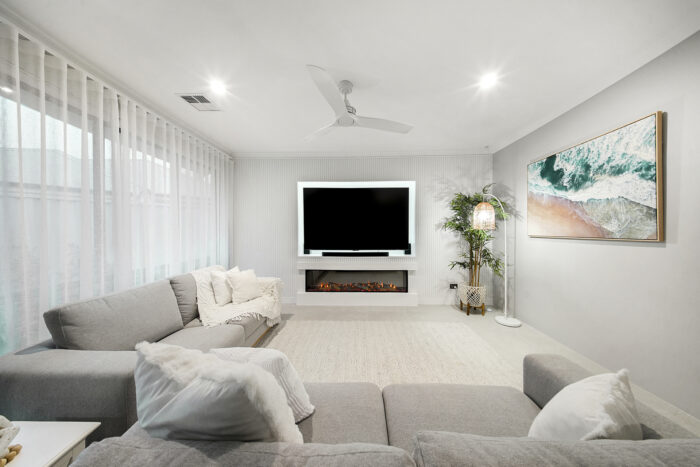
Rinnai ES1800 Electric Fireplace Feature Wall, click to read the full article here
Falling in love with aesthetics before understanding installation
There’s nothing wrong with prioritising aesthetics. Fireplaces are often a major visual centrepiece within a home.
The issue comes when the visual inspiration is considered without understanding what’s required behind the scenes to make it work. A minimalist inbuilt fireplace may require additional wall depth. A suspended wood fireplace may affect ceiling structure and flue positioning. Outdoor fireplaces can face council and boundary restrictions depending on proximity to neighbouring properties.
These details don’t necessarily mean a design vision can’t happen, but they do need to be taken into account early on for workable solutions to be explored. With our heating team, most challenges can usually be resolved once the right system and installation approach are identified.
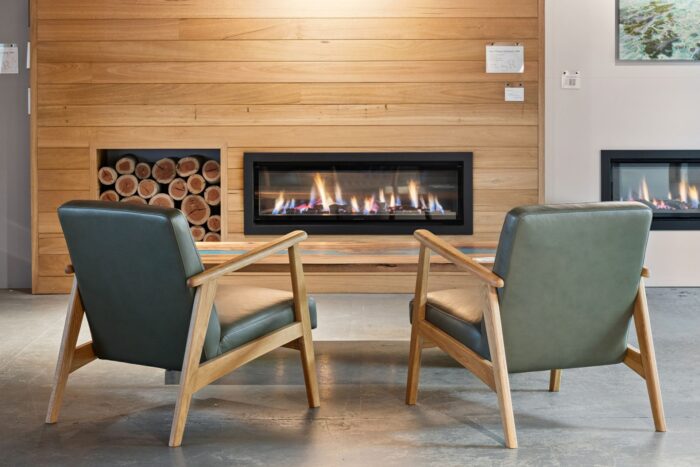
Subi Rest in store display: Real Flame Element 1200 (Single Sided)
Not considering the flue properly
Flue systems are one of the least understood parts of fireplace design, despite having a major impact on both functionality and aesthetics.
Traditional flue systems often require more direct vertical routing, which can affect rooflines and internal layouts. Power flue systems, commonly used with some gas fireplaces, offer greater flexibility and can sometimes run horizontally or through more complex pathways.
For many homeowners, this becomes an important factor once they realise how visible certain flue termination points can be externally. The earlier flue planning is considered, the easier it becomes to integrate the fireplace naturally into the architecture of the home rather than trying to retrofit around it later.
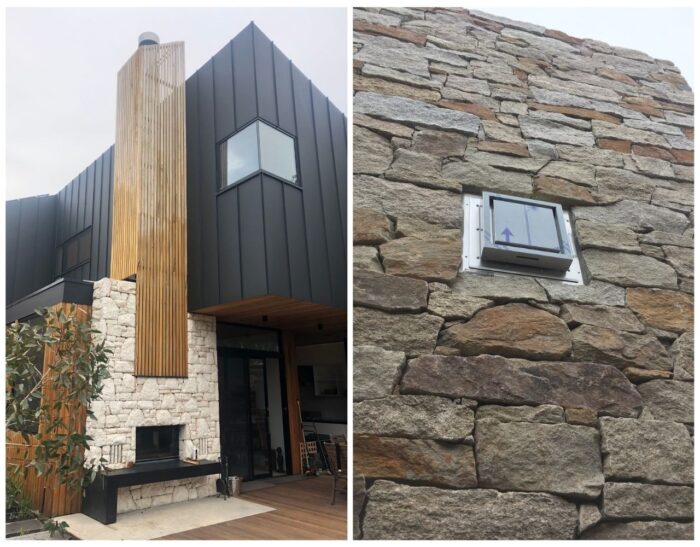
Some flue examples: insulated vertical flue concealed in cladding (left), Escea horizontal flue termination (right)
Forgetting about the room around the fireplace
Fireplace positioning is everything, from furniture layout and circulation space right down to wood storage (if required).
This is where physically viewing fireplaces in a showroom environment can make a huge difference. Seeing scale, proportions and installation examples in person often helps homeowners understand spatial relationships far more clearly than images online ever can.
At Subiaco Restoration, our extensive range of in situ and working displays allows customers to compare different fireplace styles, heating types and flue options side by side while speaking with staff who understand the practical realities behind each system. Because while choosing a fireplace should absolutely feel exciting, the best outcomes happen when all things are considered side-by-side from the get go.
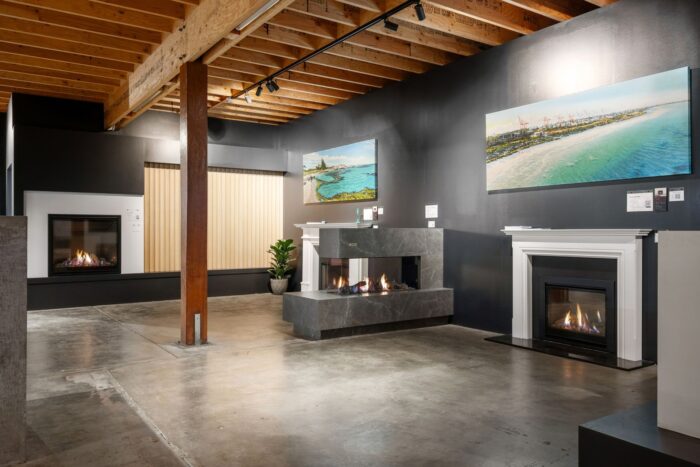
Subi Rest in store displays
Browse the full fireplace range online or come in and see them running.